


Welcome to Payments Culture!
This newsletter explores how money moves, around the world — and why it matters.
I hope you’ve had a good start to the year. It feels like it’s rained every day in the UK so far in 2026. In fact, this is the case for some places: a village in Cornwall had 50 consecutive days of rain. While we endure this deluge, we get plenty of chance to stay indoors, to write, and experiment with AI 🥲
Before getting into this week’s essay — a few short updates:
I’ve set up a reader survey for this newsletter. It takes a maximum of 4 minutes to complete, and your feedback really helps me understand what is and isn’t working. One respondent, selected at random, will receive a $100 gift card. I would really appreciate if you could take a few minutes to share your thoughts.
This January I took on a position as Co-Editor of the UK and Europe edition of This Week in Fintech. This means I put together the region's newsletter every other week. Each edition of This Week in Fintech (TWIF) is focused on fintech news from the past week, rather than long-form writing (like this newsletter), so it works as a nice complement to writing Payments Culture.
I recently did an interview with Yap Global, a leading financial and technology PR consultancy. From reading the interview you can learn which book I was reading on a beach in Malta back in 2025, and my thoughts on how the payments industry has changed over the years.
I’ll be in New Zealand for much of the next three weeks. If any of my readers are based in Aotearoa let me know. It’d be interesting to learn more about the local fintech scene over at flat white or two.
As ever, you can contact me on LinkedIn, on Twitter (X), via email, and here.

Finding Claude Code
Last month I spent some time with my parents in the countryside in Wales. My grandma was sick and nearing the end of her life. My mom and aunt were providing round-the-clock care. I was helping wherever I could, sometimes this meant taking care of the dog (who woke me up one night at 4am by licking my face), other times it meant providing emotional support, and being on hand with whatever was needed. Whenever I found the time, I tried writing. I had half-finished essays I wanted to get done, but I often struggled. With everything that was going on it was tough to concentrate.
Although I did unexpectedly pick up something else. It was a tool suited to dipping in and out whenever time allowed. Like many of you reading, I’ve been using a variety of LLMs over the past couple of years. I experimented, and soon, Chat GPT and Claude became my apps of choice (these are not LLMs themselves, rather they are interfaces to a selection of various proprietary LLMs developed by two of the largest AI companies — Open AI and Anthropic). I’d not yet seriously tried what often gets described as Vibe Coding. Building with prompts rather than having to know programming in any depth. Yet I started to tinker with Claude Code, which sits within the Claude app, or can be used in a more developer-centric terminal interface.
My grandma was born in 1928, into a world very different from our own. A world in which a basic radio was a rarity and outdoor toilets were still common in much of the UK. Almost one hundred years later, we can build complex software in days and launch globally in weeks. My grandma lived long enough to see the internet and smartphones — although, like many people of her generation, her interactions with technology were largely through her family sharing photos and videos on our devices. She passed away a little over a month ago while I was still in Wales. I wrote this essay on the way back from her funeral.
I’ve spent much of the past month working on various projects with Claude Code. In my opinion, we’re in the midst of the biggest move in AI since Chat GPT went viral a few years back (in November 2022). In the previous phase of AI building, many startups built AI wrappers, with software that links to and interacts with AI models. The downside of such an approach was the challenge of providing more value than a user could get from using an LLM directly, and the ever-present risk of depending on the underlying AI model in terms of cost and platform risk. Companies who build AI wrappers always run the risk of the model provider itself moving into the product category and competing directly, or the model provider helping others compete with you.
This new era is a paradigm shift in consumer and corporate AI. We’ve had chatbots that gave us answers to almost any question in the world, and now, in this new phase centred on AI coding, users can build their own products directly rather than merely adding a wrapper around a model. The AI is now a co-creation tool that can help plan, provide options, and do the work that previously would have taken teams of engineers and other staff.
The newsletter and consultancy Semi-Analysis recently highlighted this change:
We believe that Claude Code is the inflection point for AI “Agents” and is a glimpse into the future of how AI will function. It is set to drive exceptional revenue growth for Anthropic in 2026, enabling the lab to dramatically outgrow OpenAI.
While there have been various tools centred around building with AI, it’s Claude Code which has really broken through. Tools such as Cursor, Replit, and Windsurf are still valuable. But the recent change in perception has largely emanated from a slew of stories that emerged over the past couple of months, highlighting the leap in capability in the latest updates to Claude Code.
In January, a senior Google engineer noted that the latest version of Claude Code, running on the Opus 4.6 model, was able to produce complex distributed systems architecture in one hour, which her team had spent a full year building.
In Silicon Valley thousands of software engineers spent their Christmas holiday period experimenting with the latest version of Claude Code. In what became known as Claude Christmas, some engineers came back to work in the new year with the refrain that coding is “now solved”. The big leap was that not only did Claude Code help developers work more quickly, but it proposed architecture, presented plans, and “execute[s] sophisticated projects with little — or no — human guidance” (an excellent piece in the San Francisco Standard goes into this in a lot more detail).
Various software companies have seen their shares drop by 35% or more since the start of the year, as investors question whether existing moats remain relevant. If a competitor can build a comparable product in a matter of weeks, software becomes less defensible.
There have even been reports that many highly skilled and prolific software engineers have entirely stopped writing their own code. Senior engineers in global firms such as Spotify have barely written any code directly since December. Andrej Karpathy, an AI expert and part of the founding team at Open AI states that agent-led coding is around 80% of his workflow, with the remaining 20% for manual edits. He commented that this is “easily the biggest change to my basic coding workflow in ~2 decades of programming and it happened over the course of a few weeks.”
This is a trend which is only getting started. Again from Semi-Analysis:
Coders will stop doing code and rather request jobs to be done on their behalf. And the magic of Claude Code is it just works. Many famous coders are finally giving into the new wave of vibe coding and now realizing that coding is effectively close to a solved problem that is better off supported by Agents than humans.
Though, despite the clear breakthrough, not everyone is sold on the short-term impact of AI. Ethan Mollick, an author and keen observer of AI’s impact on the workplace, has cautioned against assuming change will happen as quickly as many forecast.

The question is whether companies trapped by corporate inertia will be overtaken by those who move more quickly.
In the fintech domain I’ve recently spoken with founders who are using agent-led coding to move at a much faster pace than previously possible. Not slightly faster, but multiple times faster. Work that might have taken a week can be done in a day. This means more experimentation and the ability to rule things out if they don’t work, testing and learning day by day, rather than waiting on weeks of development resource before a new feature can be tried and tested. However, competitors will also have the same possibilities, and not all companies are looking at this the same way. Some fintechs are cautious of using AI, scared and scarred by hallucinations when they’ve previously tried, but the technology has moved so fast, that those who do not embrace AI run big risks.
Different industries will be impacted differently. At the task level, many aspects of fintech are ripe for disruption. The extent to which some large banks and legacy payment providers still process activities manually seemed antiquated years ago, let alone today. The question is whether to disrupt from within or watch the market move right past you. As Matt Schumer, CEO of OthersideAI, recently noted:
The models available today are unrecognizable from what existed even six months ago. The debate about whether AI is “really getting better” or “hitting a wall” — which has been going on for over a year — is over. It’s done. Anyone still making that argument either hasn’t used the current models, has an incentive to downplay what’s happening, or is evaluating based on an experience from 2024 that is no longer relevant.
Based on my own research and analysis, I estimate that companies that required $50m funding a few years back, will now be able to build the same product for $5m or less.
This doesn’t mean to say that similar levels of capital won’t be required to build great companies. But expectations will change. What can be built for a certain level of capital will change, and every company will be scrutinised differently. In this new world possibilities will grow and compound as new opportunities open up. Predicting winners and losers in any fintech category will get harder, as growth becomes less linear, and expansion, whether horizontal (into new segments) or vertical (into new product lines), will at the same time have the potential to be faster than ever, yet less predictable.
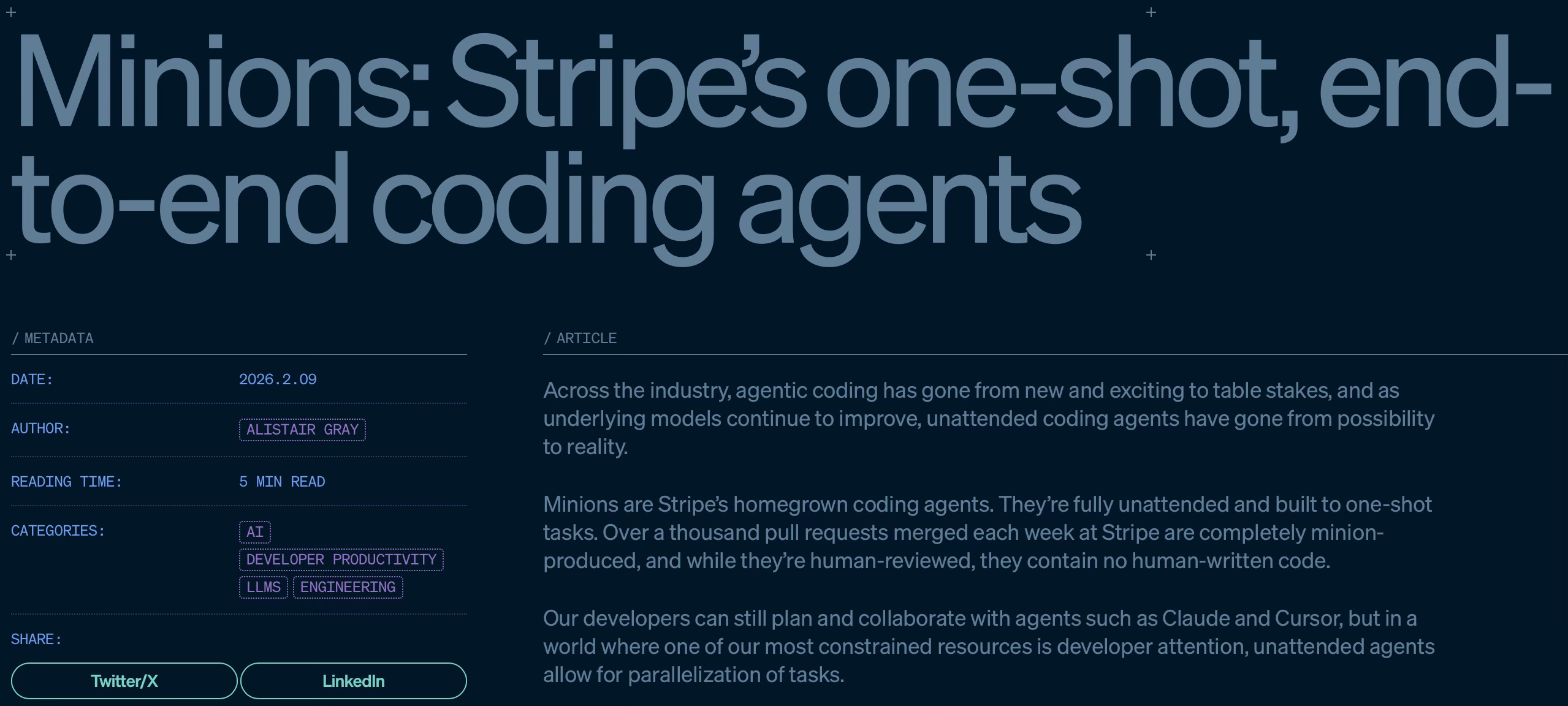
In some areas, up until now, fintechs have formed a competitive moat by being the first to market and building strong customer relationships with a product that was “good enough” — now, the components of moats will change. In regulated financial services, it’s often thought that licences to operate in specific markets, relationships with regulators, and compliance practices can themselves form part of a competitive moat. Though my instinct is that this discussion will keep evolving, and the reality may not be so black and white. In the future, what forms a defensible moat could be quite different from what we think today.
In fact, a sense of community, independent of the quality of software itself, could be a key defensive moat. Personal relationships take time to build, and no vibe-coded app or AI-led initiative can replace real-life interactions. That is, until AI agents start getting their own social community! Which has already started to happen with the Moltbook phenomenon. A foretaste of things to come?
Thanks for reading Payments Culture! In a future post I’ll share what I’ve actually been building with Claude Code over the past month. Following this I have some collaboration posts planned, and some longer analysis posts are in progress.

Please leave a comment or share with a friend or colleague if you enjoyed reading this edition. It’s much appreciated and helps grow the audience of this newsletter.
Note that views expressed on this Substack are my own and do not represent any other organisation. Also nothing I say should be taken as investment advice.